Know what soft washing and pressure washing actually change
At Wilmington properties, soft washing generally combines compatible solution, controlled dwell, and a lower-impact rinse for suitable organic and atmospheric soils. It may fit algae-like staining, pollen, mildew-like growth, bird residue, and some film on tested brick, concrete, painted surfaces, stucco, EIFS, and other materials. Accurate dilution, testing, plant protection, public separation, and runoff planning remain essential; low pressure is not automatically safe when product, dwell, rinse, or water control is wrong.
Pressure washing depends more on water impact. It may be useful for durable compatible concrete, selected paved areas, loading surfaces, curbs, and service zones where pressure at the surface, flow, nozzle, distance, angle, and drainage support the process. Too much impact can etch concrete, remove mortar, drive water into joints, damage coatings, or leave striping. The best Wilmington quote explains where pressure has a role, where chemistry is more useful, and where neither method addresses a leak, failed sealant, corrosion, salt deposit, or damaged facade.
- Choose for material and soil rather than a preset pressure setting or marketing label.
- Review chemistry, dwell, rinse, glazing, metal, plant, access, public, and runoff controls together.
- Test representative areas where coatings, repairs, masonry, or stain causes are uncertain.
- Separate routine cleaning from restoration, repair, leak diagnosis, and coating replacement.
Match Wilmington materials and deposits to the process
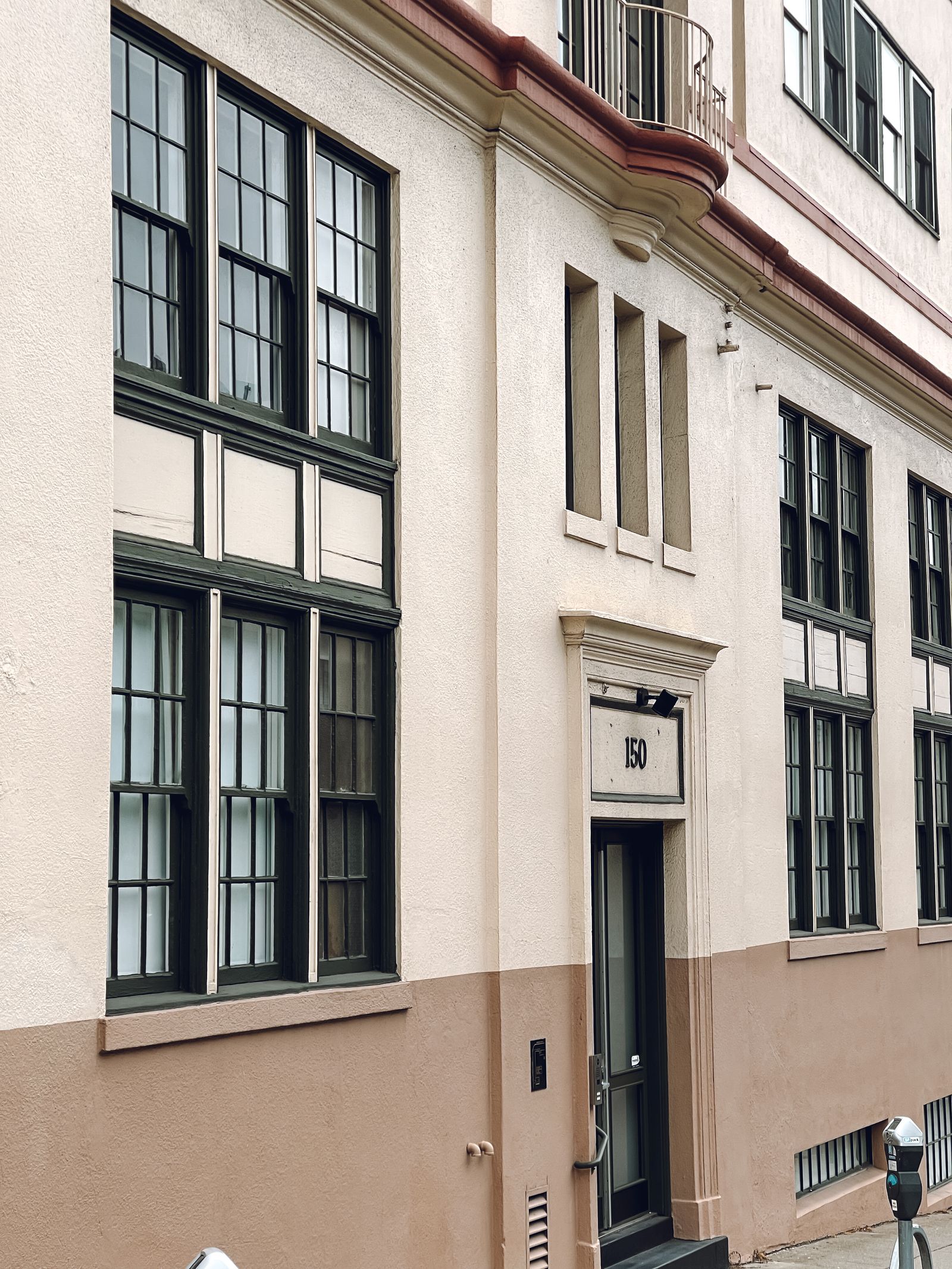
Brick and mortar need attention to porosity, joint condition, age, water absorption, and previous repairs. Concrete may accept controlled pressure in one zone but need a gentler approach where it is polished, cracked, coated, spalled, or adjacent to delicate joints. Metal panels may show oxidation, chalking, traffic film, salt, or coating failure rather than organic growth. Glass, EIFS, stucco, painted surfaces, stone, composite panels, sealants, awnings, and signs each need a compatibility review. One elevation can contain several materials around a canopy, storefront, repair, or sign band.
The appearance and location of a deposit offer clues. Green or dark film on a shaded, damp wall may be a candidate for compatible soft washing. White crust, rust-colored bleed, black carbon, efflorescence, winter salt, and streaks below a drain can point to minerals, oxidation, soot, masonry movement, or water management. A pressure nozzle may remove the visible layer while worsening the joint, coating, or substrate. Conversely, a broad concrete service apron with traffic film may need controlled pressure or a hybrid process. Method selection should follow testing and the surface's condition.
Use the site context to decide how work is delivered
Downtown Wilmington adds pedestrian crossings, curbside activity, office arrival times, storefronts, restaurant seating, and compact staging. Trolley Square adds neighborhood foot traffic and entrances close to sidewalks. Concord Pike retail properties add customer vehicles, shared parking, delivery lanes, tenant schedules, and signs that may not tolerate the same treatment as a concrete drive aisle. A medical or office site near I-95 can require patient drop-off, accessible routes, security, quiet periods, and air-intake review. Industrial sites may need a sequence around docks, trailers, gates, forklifts, shifts, and production access.
These contexts affect both method and timing. A lower-impact rinse does not remove the need for barriers or a spotter. A pressure-cleaned service zone still needs hose routing, public separation, splash control, and drainage review. Work may be staged by elevation, entrance, tenant, or traffic period. The proposal should identify who provides access, who can pause work, how vehicles and pedestrians are separated, and which areas are excluded when an occupied site cannot support the planned process.
Treat drainage and weather as part of the comparison
Wilmington's humid weather, summer storms, wind-driven rain, leaf moisture, and winter salt can influence both the deposit and the work window. A shaded masonry wall may dry slowly. A storm can move rinse water across a parking area. Salt at a curb may remain after organic film is removed. Heat can change chemical dwell and surface temperature. Freeze-thaw conditions can expose weak joints or damaged concrete that should be documented before cleaning. Review temperature, wind, rain, lightning, surface moisture, and drying time before setup.
Drainage is not a minor detail in a soft-wash or pressure-wash choice. Map downspouts, curb inlets, low points, landscaping, stormwater features, pavement joints, doors, and neighboring property. A drain beside the work does not automatically authorize treated water or sediment to enter it. Depending on the site, the plan may require diversion, collection, recovery, filtration, reduced rinse volume, plant protection, disposal, or coordination with the responsible authority. If the water path cannot be controlled, the correct answer may be a different work window, smaller area, alternate equipment, or no work until the site condition changes.
- Review whether the mark is organic film, salt, mineral, oxidation, soot, efflorescence, or drainage-related.
- Map inlets, low points, landscaping, doors, air intakes, accessible routes, and neighboring property.
- Set weather pause triggers for wind, rain, lightning, surface moisture, heat, and freezing conditions.
- Document conditions that require masonry repair, facade restoration, leak work, or another trade.
Compare the quote, not just the equipment
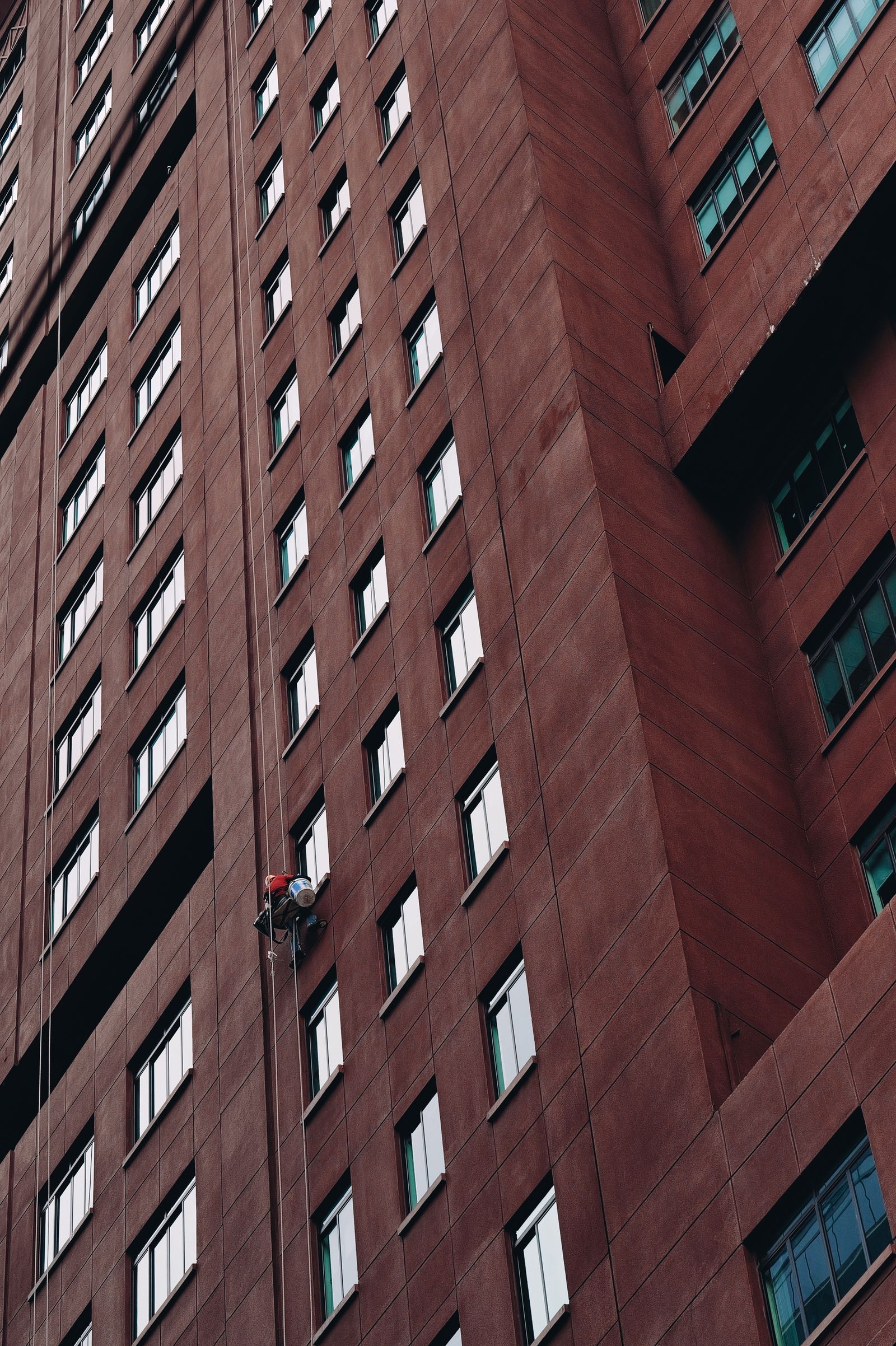
A useful comparison should show the proposed method by surface and elevation. Look for the likely soil, test area, chemistry or pressure approach, dwell and rinse expectations, protection for glass, metal, plants, masonry, vehicles, and equipment, access method, public separation, runoff controls, weather assumptions, and exclusions. Be cautious of a quote that treats every material as one wall, promises removal of every stain, or uses a pressure number as proof of safety. The most appropriate plan may combine soft washing on compatible facade soil with controlled pressure on a durable service area and hand detail at sensitive trim.
Send photos and the address, then describe the outcome that matters: a cleaner public entrance, improved retail presentation, less visible organic film, a planned maintenance wash, or an evaluation of a stubborn mark. Drone Building Cleaners can discuss offices, healthcare facilities, schools, retail centers, hospitality properties, mixed-use buildings, and industrial sites in Wilmington and nearby New Castle County communities. Call +1 239-351-2897 or email contact@dronebuildingcleaners.com to get in touch and request a property-specific quote.